
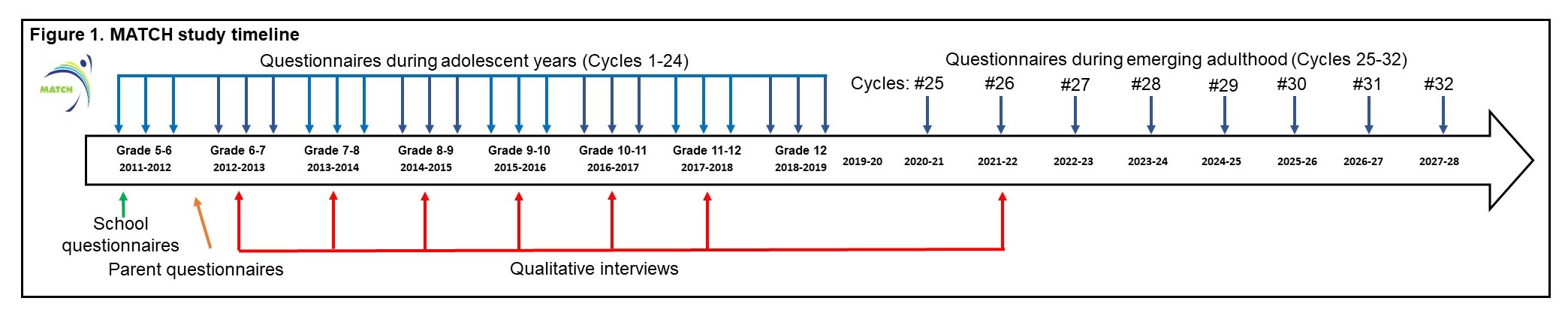
 Since 2011, the MATCH study has been following nearly 1,000 young people. At the start of the study, they were between 10 and 12 years old, and today these participants are adults. By periodically answering questionnaires, they help us better understand how health-related behaviors change during key stages of life.
Team
Principal Investigator: Mathieu Bélanger
Co-Investigators: Jennifer Brunet, Isabelle Doré, François Gallant, Katie Gunnell, Jennifer O’Loughlin, Catherine Sabiston et Marie-Pierre Sylvestre
Coordinator: Julie Dufresne
Database Manager: Jeffrey Gaudet
Students (past and present) : Jean-Sébastien Chevarie, Sara DeGrâce, Yanis Saheb, Maryse Gagnon, Emilie Beaulieu, Marie-Claude Lavigne-Albert, Marie-Andrée Giroux, Anika Boucher, Katarina Laevski, Sarah-Maude Boucher, Pascale Plourde Roussel et Valerie Dery (MD-Sherbrooke), Julie Goguen (MSc-Sherbrooke), Jason MacKenzie (MSc-Sherbrooke), Erin Wing (MSc-Ottawa), Stéphanie Ward (MSc-Sherbrooke), François Gallant (MSc-Sherbrooke), Teodora Riglea (MSc-Montréal), Marie-Ève Michaud (MSc-Sherbrooke), Jean-François Clément (MSc-Sherbrooke), Chloé Drapeau (MSc-Montréal), Kristy Smith (PhD-Windsor), Véronique Thibault (PhD-Sherbrooke), François Gallant (PhD-Sherbrooke), Pierre Philippe Wilson Registe (PhD-Sherbrooke), Salma Jemaa (PhD-Sherbrooke)
Postdoctoral Researcher (past and present): Katie Gunnell (Ottawa), Patrick Abi Nader (Sherbrooke), Isabelle Doré (Toronto), Jodie Stearns (Ottawa), Radhouene Doggui (Sherbrooke), Ross Murray (Toronto), Corentin Montiel (Montréal), Lars Lenze (Bern), Charles-Etienne White-Gosselin (Montréal)
MATCH Study Results
The study’s data has led to several discoveries on various topics. Here is a summary of some of these findings:
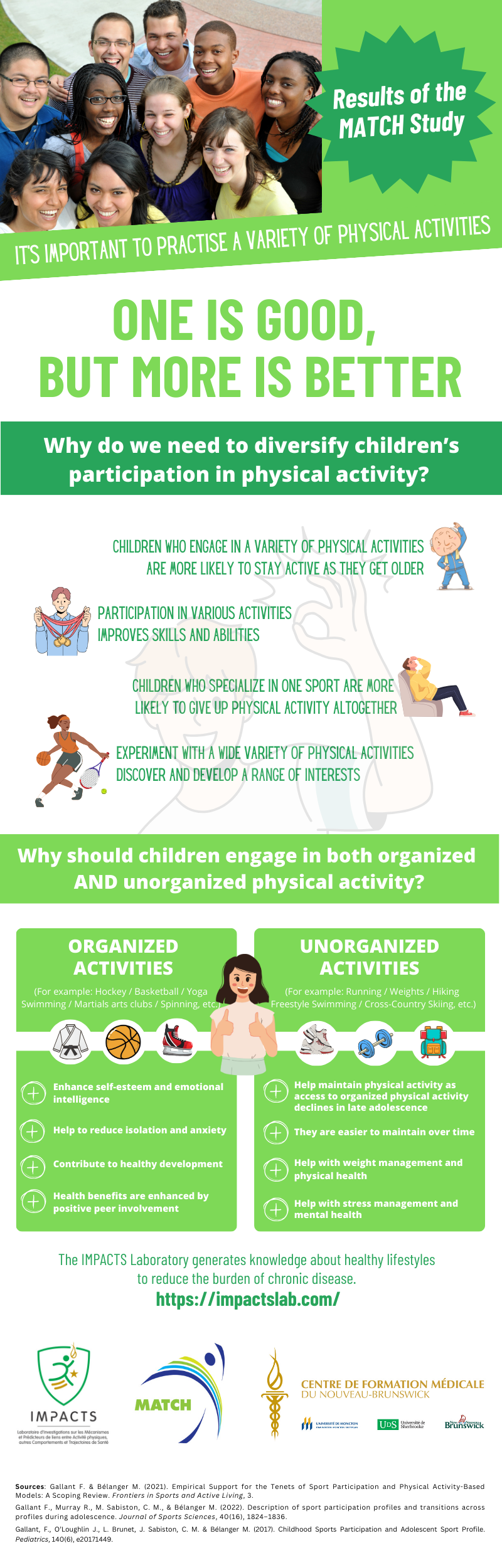
THE IMPORTANCE OF PRACTICING A VARIETY OF PHYSICAL ACTIVITIES
- Young people who engage in a wide variety of physical activities are more likely to stay active as they grow older.
- Trying different types of physical activities helps discover and develop diverse interests.
- Young people who specialize in only one sport are at greater risk of giving up physical activity altogether.
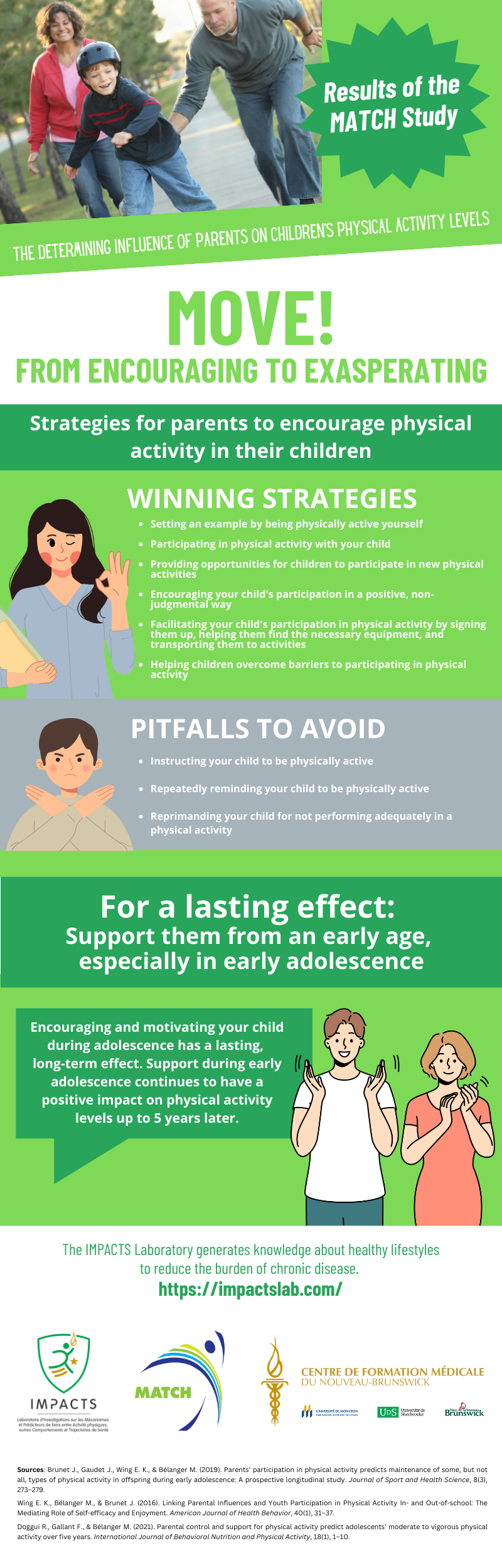
THE INFLUENCE OF PARENTS ON YOUNG PEOPLE’S LEVEL OF PHYSICAL ACTIVITY
- Parents have a decisive impact on young people’s activity levels in both the short and long term.
- Young people who can rely on concrete and tangible support from their parents (such as accompanying them to training sessions, covering related costs, providing equipment, etc.) are more likely to maintain a higher level of physical activity for many years.
- Leading by example works. Children whose parents practice less popular sports (e.g., climbing, ultimate frisbee, etc.) are more inclined to explore these disciplines.
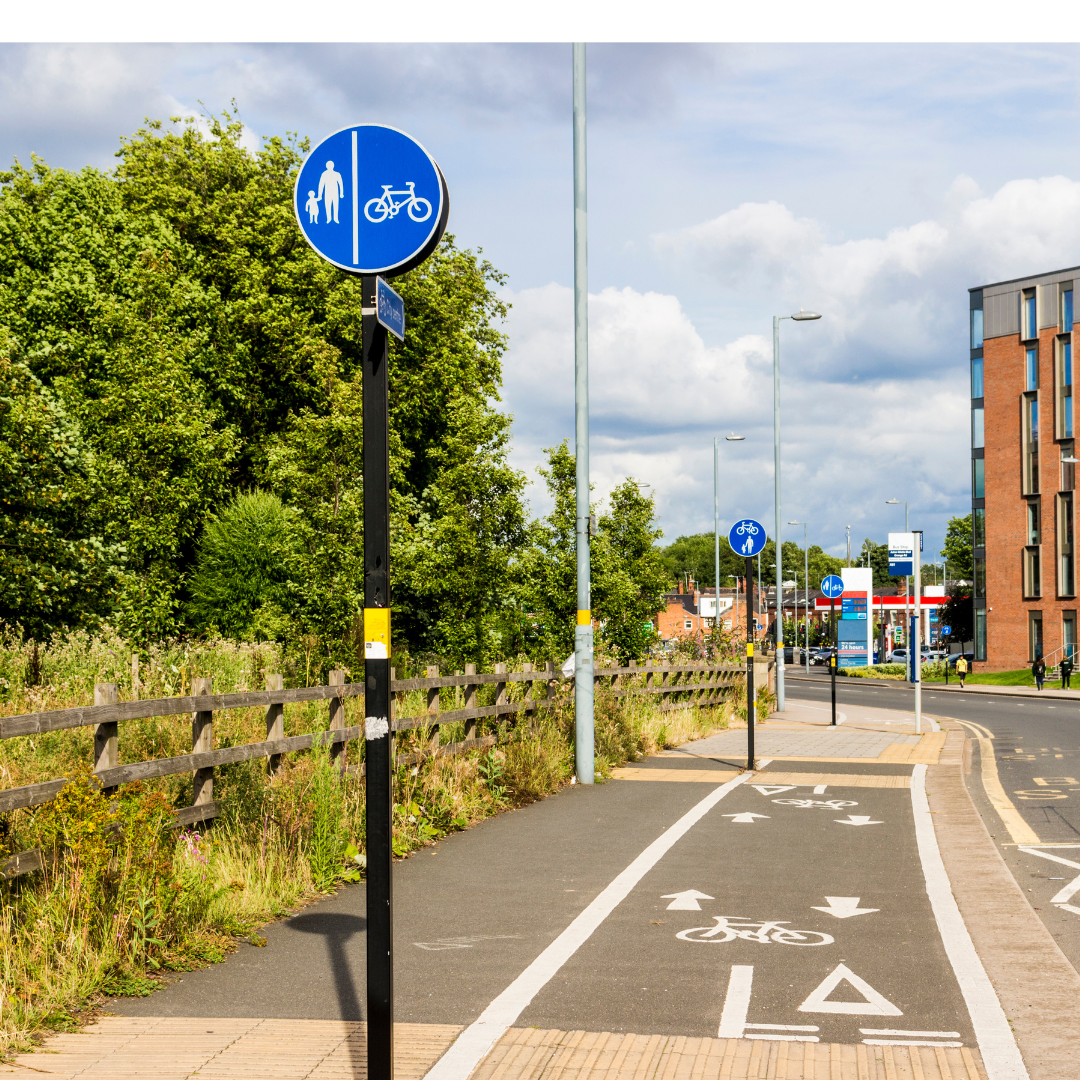
THE INFLUENCE OF THE BUILT ENVIRONMENT
- The presence of infrastructure (bike paths, parks with multipurpose facilities, trails) and a supportive school environment (bike racks, school crossing guards, active transportation programs, etc.) encourages physical activity.
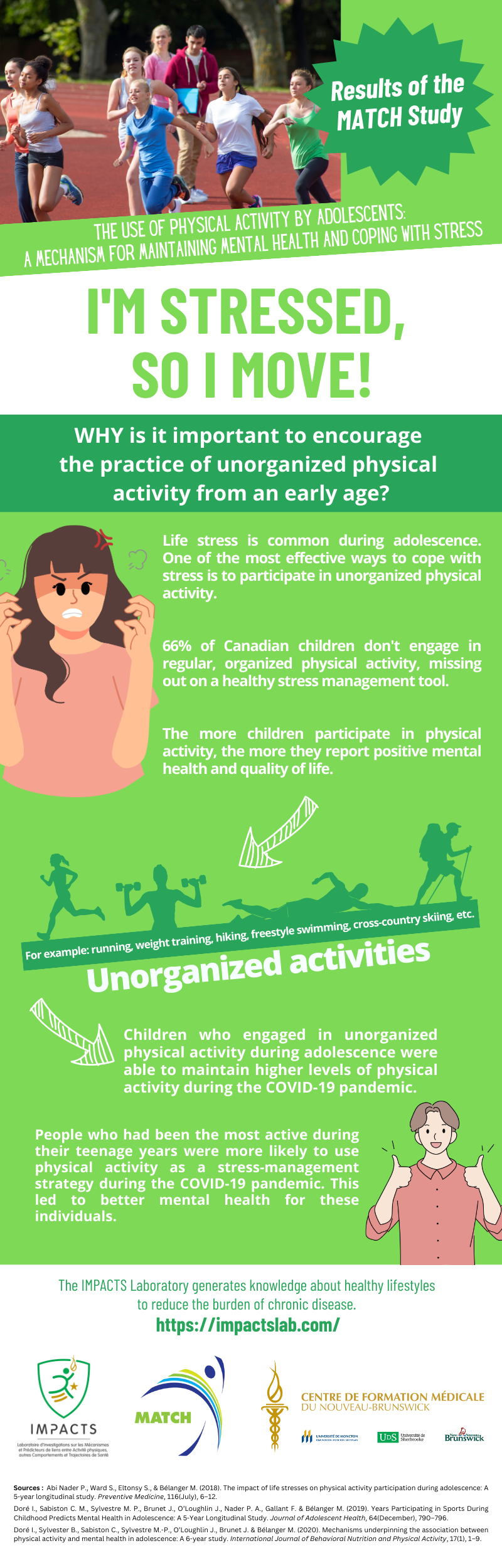
MENTAL HEALTH AND PHYSICAL ACTIVITY
- The more young people participate in physical activities, the more they report having positive mental health and a good quality of life.
- Youth who engaged in more physical activities during adolescence are more likely to use physical activity as a stress management strategy and reported better mental health during the COVID-19 pandemic.
- Physical activity during adolescence continues to have positive effects on the mental health of young adults.
- 66% of Canadian youth do not engage in physical activity on a regular basis and therefore cannot benefit from this tool for stress management.
- When individuals become more active, their physical and social quality of life improves.
- Meeting three psychological needs — positive social interactions, a sense of competence, and a sense of autonomy — promotes regular physical activity.
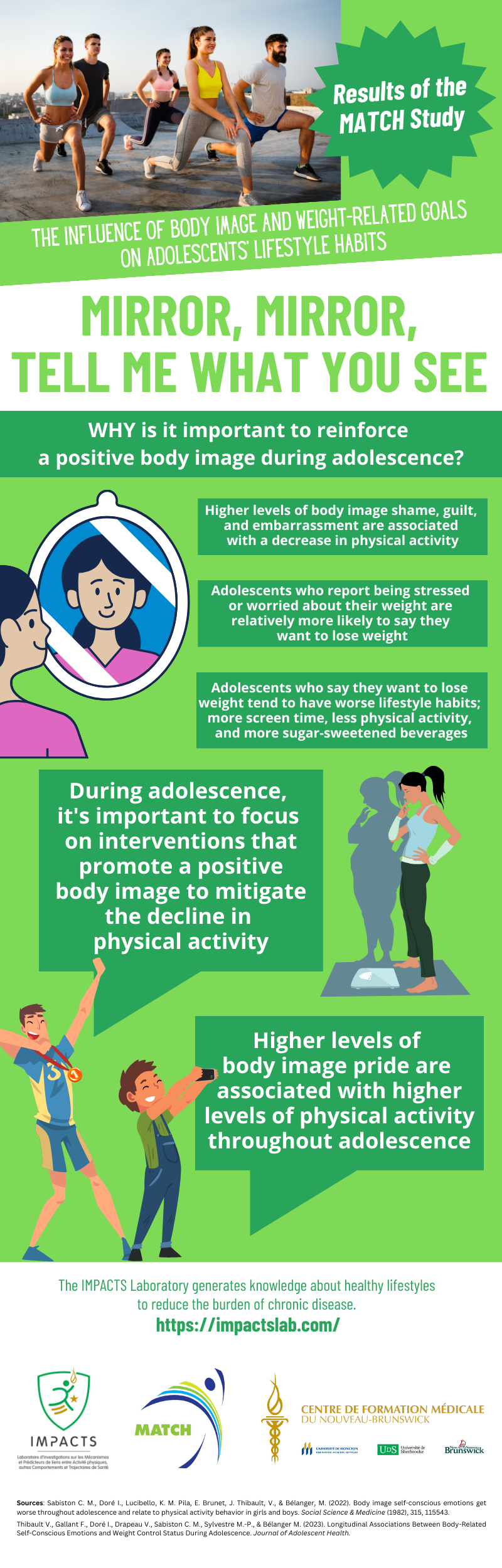
BODY IMAGE AND LIFESTYLE HABITS
- Higher levels of shame, guilt, and embarrassment related to body image are associated with a greater decrease in physical activity.
- Adolescents who say they want to lose weight generally have poorer lifestyle habits: more screen time, higher consumption of sugary drinks, and less physical activity.
- A higher level of pride in one’s body image is linked to a higher level of physical activity throughout adolescence.
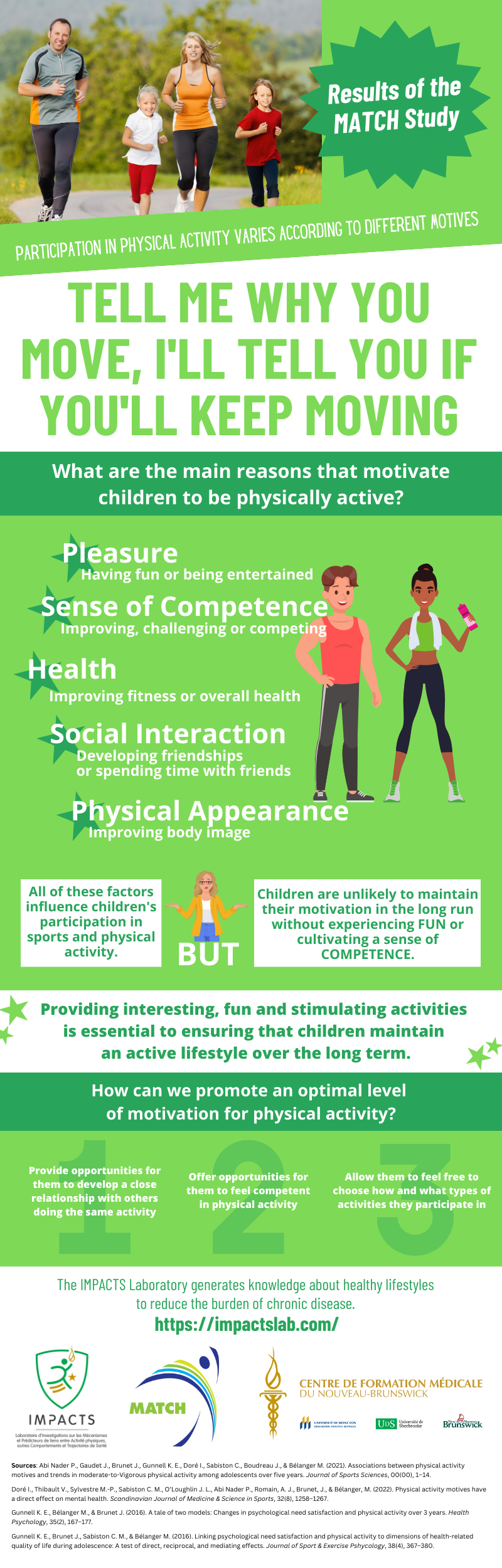
MOTIVATIONS AND PHYSICAL ACTIVITY
- Children who engage in physical activity for fun are more likely to participate in organized physical activities.
- Those who aim to improve their skills tend to take part more often in group activities and are more likely to reach the recommended daily levels of physical activity.
- Among boys, motives related to enjoyment are positively associated with physical activity, while motives related to fitness are negatively associated.
- Among girls, motives related to competence are linked to greater participation.
- Although young people face internal barriers (e.g., lack of interest) and external barriers (e.g., lack of equipment), only internal barriers are likely to hinder their engagement in physical activity.
PHYSICAL ACTIVITY PARTICIPATION PROFILES
Adolescents who engage in multiple types of physical activities—whether organized or not—are generally more active as adults. This “multi-sport” profile appears to be more beneficial than that of youth involved in only one organized sport, a form of specialization often discouraged.
This diversity of sports experiences helps young people develop autonomy and confidence to stay active, even outside formal structures. Moreover, adolescents who have practiced a variety of sports are also more likely to use physical activity as a way to cope with stress, which is associated with better mental health in adulthood.
In short, diversity and flexibility in sports practices during adolescence seem to be key factors for an active lifestyle and good long-term mental health.

The multisports
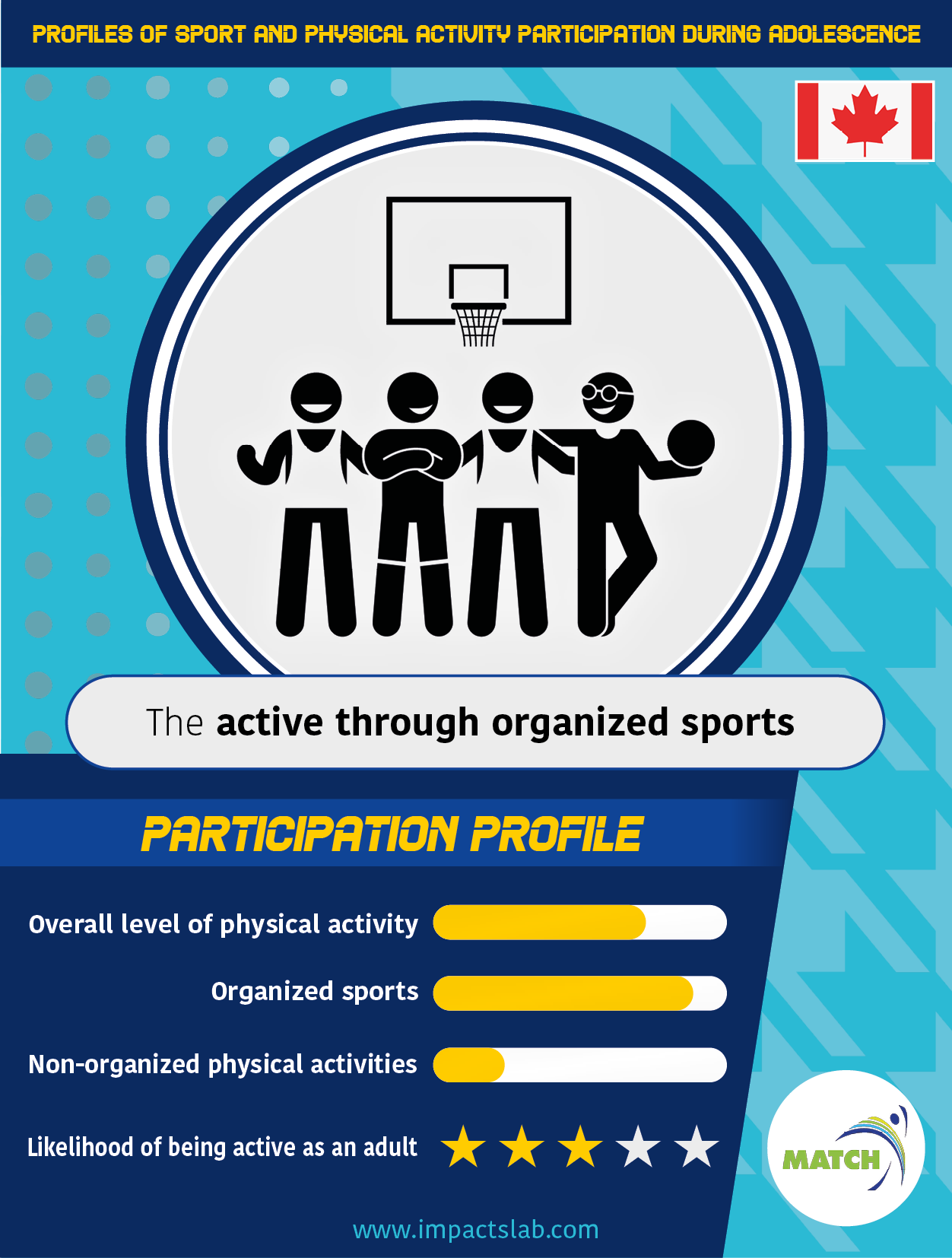
The active through organized sports
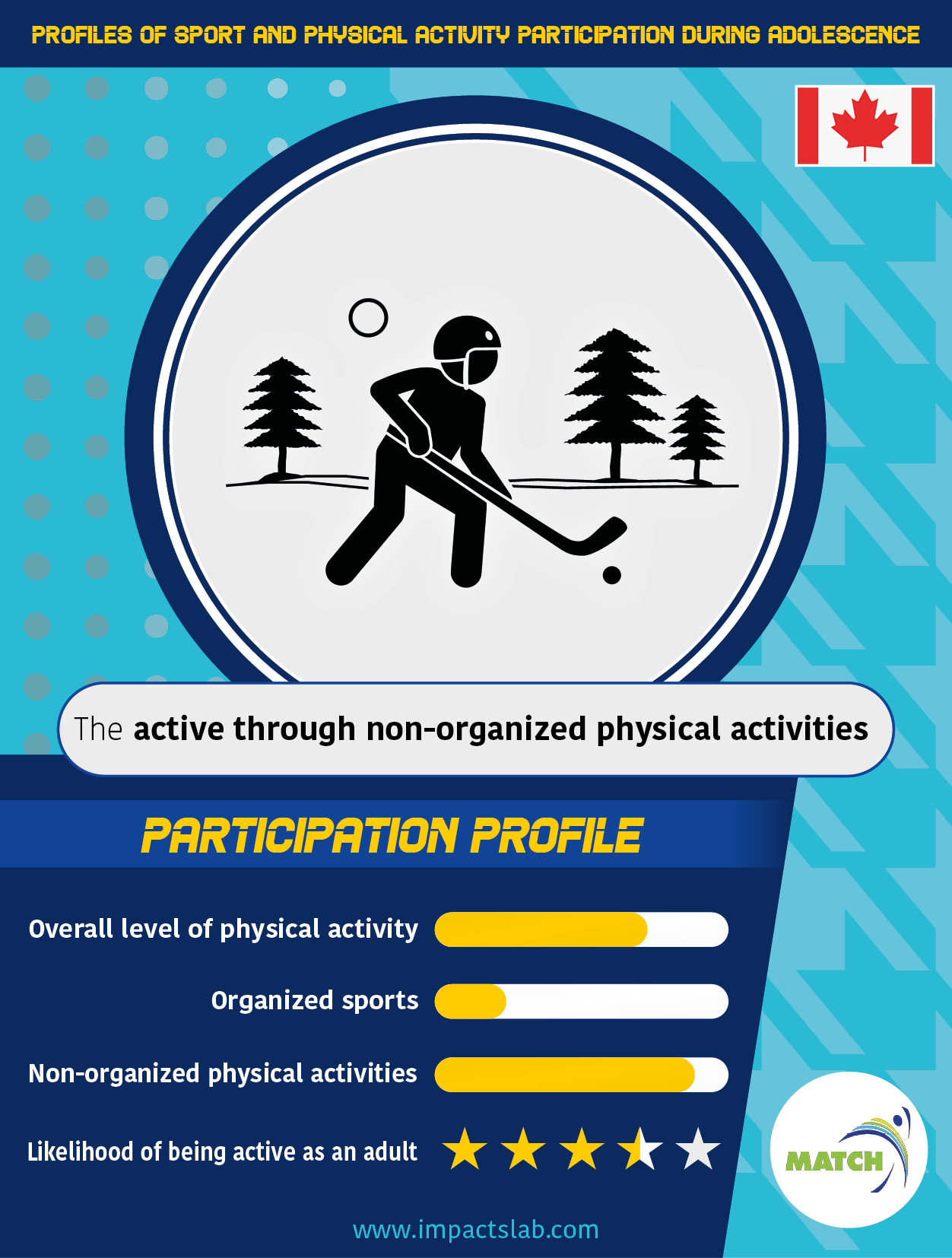
The active through non-organized physical activities
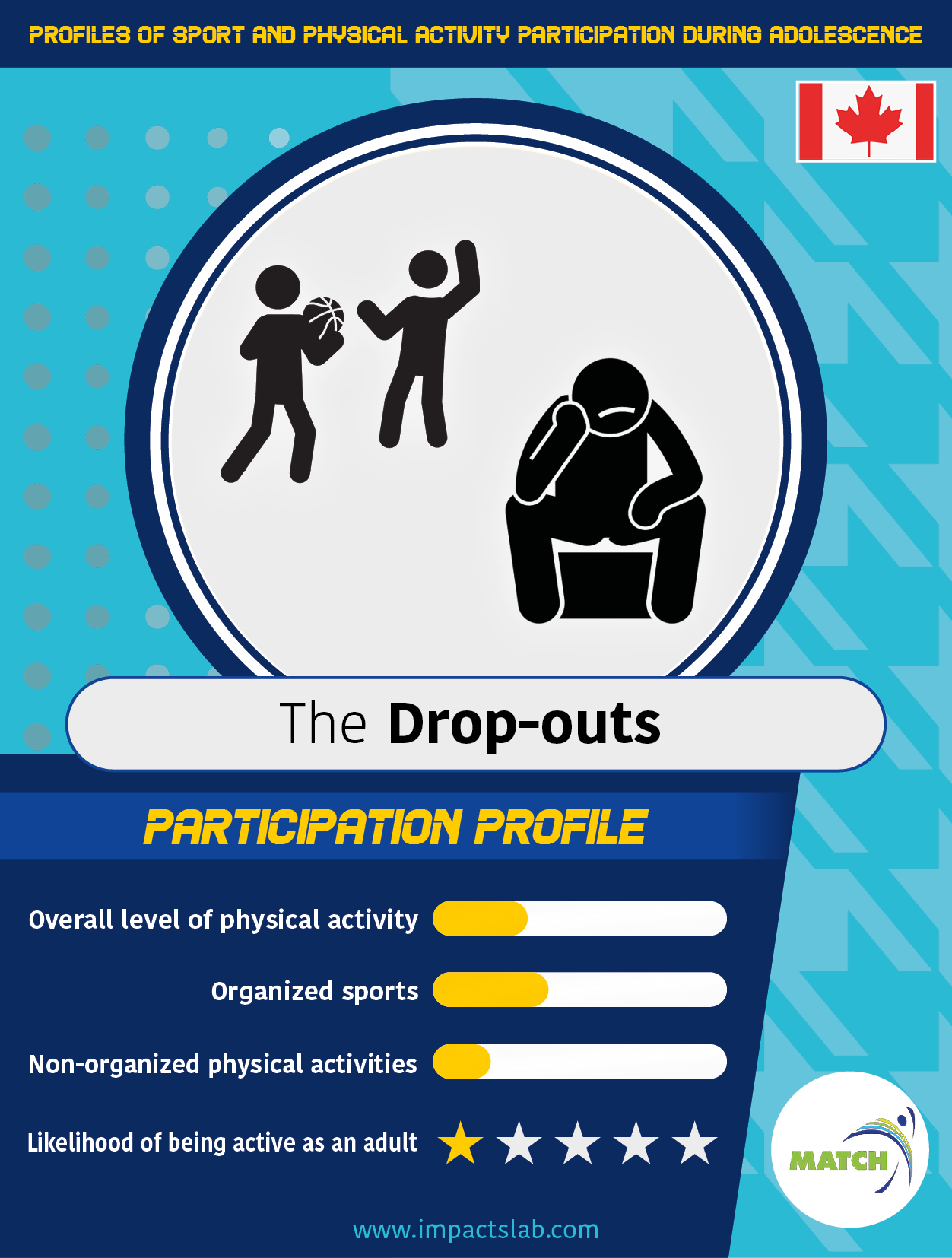
The drop-outs
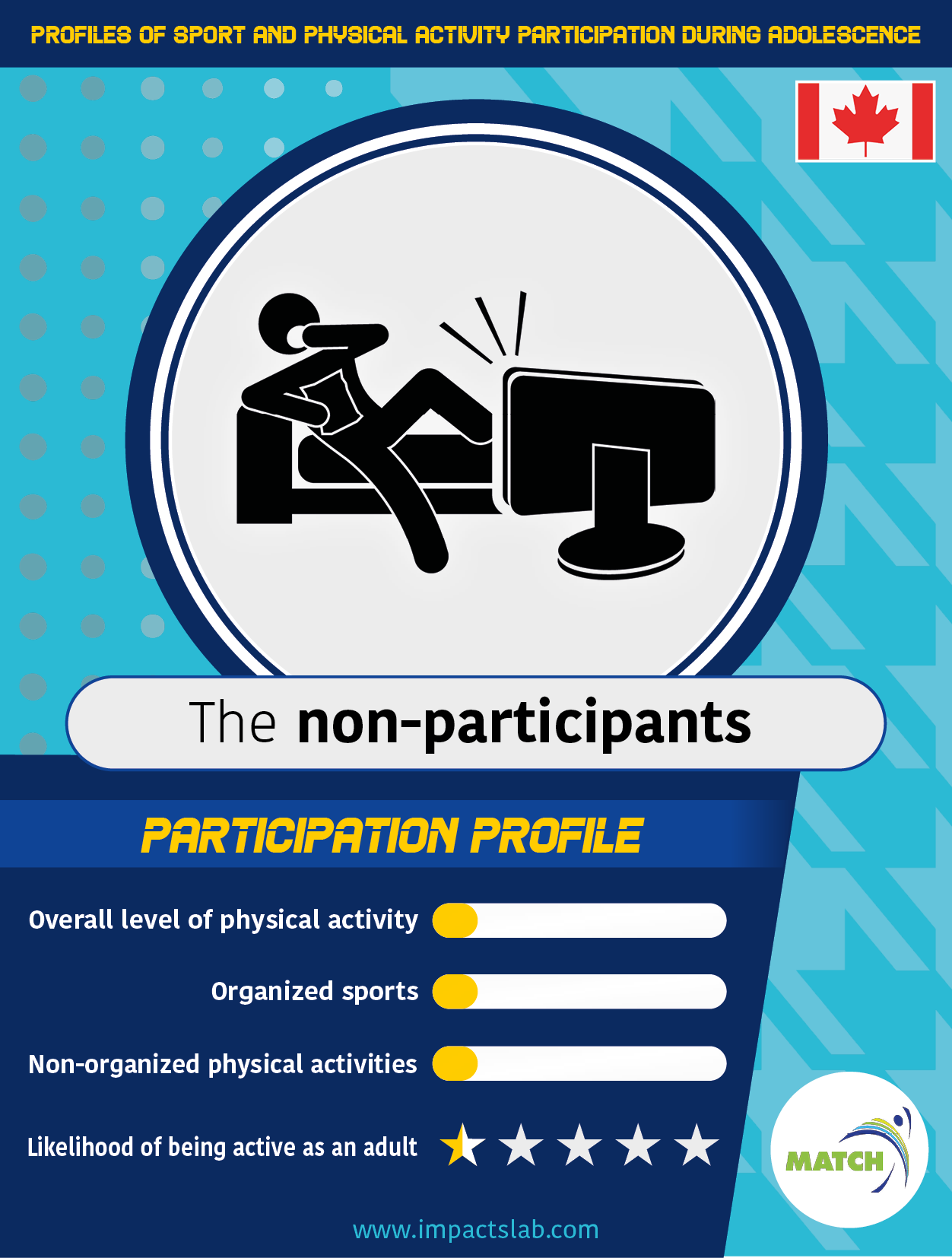
The non-participants
Scientific Publications
| Articles | Savoirs URL |
|---|---|
| 43. Registe, Pierre Philippe Wilson, Faivre, Pierre, Tanguay, Pamela, Gallant, François, Mekari, Saïd, & Bélanger. Mathieu. (2026). Exploring Which of Timing or Accumulation of Physical Activity During Adolescence Better Predicts Physical Activity in Early Adulthood. Journal of Physical Activity and Health. Advance online publication. https://doi.org/10.1123/jpah.2025-0617 | À venir / coming soon |
| 42. Drapeau, C., Lenze, L., Montiel, C., Gallant, F., Bélanger, M., Doré, I. (2025). Association between outdoor physical activity and positive mental health in adolescence: estimating the mediation effect of autonomy, competence and relatedness. Int J of Behavioral Nutrition and Physical Activity. 22:150. https://doi.org/10.1186/s12966-025-01847-z | https://hdl.handle.net/11143/23819 |
| 41. Montiel, C., Comtois-Cabana, D., Bélanger, M., & Doré, I. (2025). Is It the Walk or the Park? Exploring Associations Between Exposure to Nature in General and Through Physical Activity and Positive Mental Health in Young Adults in Canada. Journal of Physical Activity and Health, 1(aop), 1–7. https://doi.org/10.1123/jpah.2025-0349 | À venir / coming soon |
| 40. Registe, P. P. W., Jemaa, S., Mekari, S., Sylvestre, M.-P., Brodeur, M., & Bélanger, M. (2025). The timing or accumulation of physical activity during adolescence: Which better predicts positive mental health and quality of life in early adulthood? Mental Health and Physical Activity, 29, 100727. https://doi.org/10.1016/j.mhpa.2025.100727 | À venir / coming soon |
| 39. Bélanger, M., Registe, P. P. W., Faivre, P., Tanguay, P., Jemaa, S., Gallant, F., Giroux, M.-A., Thibault, V., Hakim, J., Clément, J.-F., & Mekary, S. (2025). Are technologies designed to support physical activity really helping young adults be active? A four-year longitudinal study. Journal of Behavioral Medicine, 48(6), 984–994. https://doi.org/10.1007/s10865-025-00611-9 | https://hdl.handle.net/11143/23821 |
| 38. Bélanger, M., Giroux, MA., Registe, P.P.W. et al. Adolescent physical activity profiles as determinants of emerging adults’ physical activity. Int J Behav Nutr Phys Act 22, 35 (2025). | https://hdl.handle.net/11143/23218 |
| 37. Gallant, F., Giroux, M.A., Registe, P.P.W., Mekari, S., Doré, I., Sabiston, C., Bélanger, M. (2024). Basic psychological need satisfaction as correlates of physical activity trajectories during adolescence. Scandinavian Journal of Medicine and Science in Sports, 34:e14743. | http://hdl.handle.net/11143/22181 |
| 36. O’Loughlin, E. K., Sabiston, C. M., Riglea, T., Naja, M., Bélanger, M., Wellman, R. J., Sylvestre, M. P., & O’Loughlin, J. L. (2024). Exergaming in young adults: Natural course and predictors of sustained exergaming. Games for Health Journal. Accepted September 5th, 2024.1. | À venir / coming soon |
| 35. Bélanger, M., Goguen, J., Beauchamp, J., Gallant, F., Boucher, A., Chevarie, J.S., DeGrace, S., Saheb, Y., Gagnon, M., Doré, I., Sabiston, C.M. (2024). Identification of distinct physical activity profiles through adolescence: a longitudinal qualitative description study. Frontiers in Sports and Active Living. Volume 6 – 2024 | | À venir / coming soon |
| 34. O’Loughlin, E., Sabiston, C.M., Riglea, T., Naja, M., Bélanger, M., Wellman, R., Sylvestre, M.P., O’Loughlin, J. (2024). Natural course and predictors of sustained exergaming in young adults. Games for Health Journal. | À venir / coming soon |
| 33. Clément, JF., Gallant, F., Hudon, C. Montiel, C., Riglea, T., Berbiche, D., Doré, I., Sylvestre, MP., O’Loughlin, J., Bélanger, M. (2024) Use of physical activity as a coping strategy mediates the association between adolescent team sports participation and emerging adult mental health. | http://hdl.handle.net/11143/21705 |
| 32. Murray, R., Sabiston, C.M., Doré, I., Sylvester, B., Bélanger, M. (2024) Does participating in a variety of activities, locations, or different people predict physical activity behaviour among adolescents? The mediating role of perceived variety. | http://hdl.handle.net/11143/21704 |
| 31. Thibault, V., Gallant, F., Paiement, K., Ward Chiasson, S., Lemieux, S., Abi Nader, P., Bélanger, M. (2023). A Canadian longitudinal study of the associations between weight control status and lifestyle behaviors during adolescence. | http://hdl.handle.net/11143/21703 |
| 30. Thibault, V., Gallant, F., Sylvestre, M.P., Drapeau, V., Doré, I., Sabiston, C., Bélanger, M. (2023). Longitudinal associations between body-related self-conscious emotions and weight control status during adolescence. Journal of Adolescent Health. | http://hdl.handle.net/11143/20808 |
| 29. Gallant, F., Hebert, J., Thibault, V., Mekari, S., Sabiston, C.M., Bélanger, M. (2023). Puberty timing and relative age as predictors of physical activity discontinuation during adolescence. Scientific Reports | http://hdl.handle.net/11143/20809 |
| 28. Sabiston, C.M., Doré, I., Lucibello, K.M., Pila, E., Brunet, J., Thibault, V., Bélanger, M. (2022). Body image self-conscious emotions get worse throughout adolescence and relate to physical activity behavior in girls and boys. Social Science & Medicine, vol. 315, December 2022, article 115543, 9 p. | http://hdl.handle.net/11143/20812 |
| 27. Gallant, F., Murray, R.M., Sabiston, C.M., Bélanger, M. (2022). Description of sport participation profiles and transitions across profiles during adolescence. Journal of Sports Sciences, vol. 40, no 16, p. 1824-1836 | http://hdl.handle.net/11143/20810 |
| 26. Smith, K. L., Bélanger, M., Chittle, L., Dixon, J. C., Horton, S., & Weir, P. L. (2022). Does Relative Age Influence Organized Sport and Unorganized Physical Activity Participation in a Cohort of Adolescents? Sports, 10(7), 97. | http://hdl.handle.net/11143/20792 |
| 25. Doggui, R., Ward, S., Johnson, C., Bélanger, M. (2022). Trajectories of beverage consumption during adolescence. Appetite. | http://hdl.handle.net/11143/20794 |
| 24.Doré I, Thibault V, Sylvestre MP, Sabiston CM, O’Loughlin J, Abi Nader P, Romain AJ, Brunet J, Bélanger M. (2022). Physical activity motives have a direct effect on mental health, Scandinavian Journal of Medicine & Science in Sports. | http://hdl.handle.net/11143/20811 |
| 23. Stearns, J., Bélanger, M., O’Loughlin, J., Brunet, J. (2022). Change in the social context of physical activity across adolescence and its association with moderate-to-vigorous intensity physical activity. Psychology of Sport and Exercise. | http://hdl.handle.net/11143/20800 |
| 22. Abi Nader, P., Gaudet, J., Brunet, J., Gunnell, K., Dore, I., Sabiston, C.M., Boudreau, J., Bélanger, M. (2021). Associations between Physical Activity Motives and Trends in Moderate-to-Vigorous Physical Activity Among Adolescents Over Five Years. Journal of Sports Sciences. 1-14. | http://hdl.handle.net/11143/20798 |
| 21. Doggui, R., Ward, S., Johnson, C., Bélanger, M. (2021). Trajectories of eating behaviour changes during adolescence. Nutrients, Volume 13, Issue 4, | http://hdl.handle.net/11143/20793 |
| 20. Doggui, R., Gallant, F., Bélanger, M. (2021). Parental control and support for physical activity predict adolescents’ moderate to vigorous physical activity over five years. International Journal of Behavioral Nutrition and Physical Activity, 18(1), 1-10. | http://hdl.handle.net/11143/20796 |
| 19. *Riglea, T., Dore, I., O’Loughlin, J., Bélanger, M., Sylvestre, M.P. (2021). Contemporaneous trajectories of physical activity and screen time in adolescents. Applied Physiology, Nutrition, and Metabolism. 2021 Jun;46(6):676-684. | http://hdl.handle.net/11143/20799 |
| 18 Gallant, F, Thibault, V., Hebert, J., Gunnell, K., Bélanger, M. (2020). One size does not fit all: Identifying clusters of physical activity, screen time, and sleep behaviour co-development from childhood to adolescence. International Journal of Behavioral Nutrition and Physical Activity. 17, Article number: 58. | http://hdl.handle.net/11143/20773 |
| 17. Doré, I., Sylvester, B., Sylvestre, MP., Sabiston, C., O’Loughlin, J., Brunet, J., Bélanger, M. (2020). Mechanisms underpinning the association between group sport participation and mental health in adolescence: A 6-year study. International Journal of Behavioral Nutrition and Physical Activity. 17, 9. | http://hdl.handle.net/11143/20795 |
| 16. Larouche, R., Gunnell, K., Bélanger, M. (2019) Seasonal variations and changes in school travel mode from childhood to late adolescence: a prospective study in New Brunswick, Canada. Journal of Transport & Health. 12, 371-378. | http://hdl.handle.net/11143/20790 |
| 15. Bélanger, M., Gallant, F., Abi Nader, P., O’Loughlin, J., Sabiston, C., Doré, I., Gunnell, K., Larouche, R., Sylvestre, MP. (2019). Physical activity mediates the relationship between outdoor time and mental health. Preventive Medicine Reports. 36. | http://hdl.handle.net/11143/20774 |
| 14. Doré, I., Sabiston C., Sylvestre, MP., Brunet, J., O’Loughlin, J., Abi Nader, P., Gallant, F., Bélanger M. (2019). Years participating in sports during childhood predicts mental health in adolescence: A 5-year longitudinal study. Journal of Adolescent Health, 64, 790-796. | http://hdl.handle.net/11143/20775 |
| 13. Brunet, J., Gaudet, J., Wing, E., Bélanger, M. (2019). Parents’ participation in physical activity predicts maintenance of some, but not all types of physical activity in offspring during early adolescence: A prospective longitudinal study. Journal of Sport and Health Science. | http://hdl.handle.net/11143/20772 |
| 12. Abi Nader, P., Ward, S., Eltonsy, S., Bélanger, M. (2018). The Impact of Life Stresses on Physical Activity Participation during Adolescence: a 5-Years Longitudinal Study. Preventive Medicine. 116:6–12 | http://hdl.handle.net/11143/20788 |
| 11. Gunnell K. E., Brunet, J., Bélanger, M. (2018) Out with the old, in with the new: Assessing change in screen time when measurement changes over time. Preventive Medicine Reports | http://hdl.handle.net/11143/20776 |
| 10. Gallant, F., O’Loughlin, J., Brunet, J., Sabiston, C., Bélanger, M. (2017). Childhood Sport Participation Profile Predicts Adolescent Sport Profile. Pediatrics. | http://hdl.handle.net/11143/20815 |
| 9. Gunnell, K. E., Brunet, J., Sabiston, C. M., Bélanger, M. (2016). Linking psychological need satisfaction and physical activity to health-related quality of life during adolescence: A test of direct, reciprocal, and mediating effects. Journal of Sport & Exercise Psychology, 38, 367-380. | http://hdl.handle.net/11143/11261 |
| 8. Brunet J., Gunnell, K. E., Teixeira, P., Sabiston, C. M., Bélanger, M. (2016). Should we be looking at the forest or the trees? Overall psychological needs satisfaction and individual needs as predictors of physical activity. Journal of Sport & Exercise Psychology, 38, 317-330. | http://hdl.handle.net/11143/20797 |
| 7. Wing, E.K., Bélanger, M., Brunet, J. (2016). Linking Parental Influences and Youth Participation in Physical Activity In- and Out-of-School: The Mediating Role of Self-Efficacy and Enjoyment. American Journal of Health Behavior, 40(1): 31-37. | http://hdl.handle.net/11143/20816 |
| 6. Gunnell, K. E., Brunet, J., Bélanger, M. (2015). A Tale of Two Models: Changes in Psychological Need Satisfaction and Physical Activity over 3 Years. Health Psychology. | http://hdl.handle.net/11143/13226 |
| 5. Goguen Carpenter, J., Bélanger, M., Xhignesse, M., Ward, S., Caissie, I., Sabiston, C., O’Loughlin, J. (2015). Association between physical activity motives and type of physical activity in children. International Journal of Sport and Exercise Psychology,1-15. | http://hdl.handle.net/11143/11276 |
| 4. MacKenzie, J., Brunet, J., Boudreau, J., Iancu, H.D., Bélanger, M. (2015). Does Proximity to physical activity infrastructures predict maintenance of organized and unorganized physical activities in youth? Preventive Medicine Reports, 2: 777-782. | http://hdl.handle.net/11143/20789 |
| 3. Ward, S., Bélanger, M., Goguen, J., Caissie, I., Vanasse, A., Donovan, D. (2015). Association between school policies and built environment, and youth’s participation in various types of physical activities. Journal of School Health, 85(7): 423. | http://hdl.handle.net/11143/20791 |
| 2. Gunnell, K.E., Brunet, J., Wing, E.K., Bélanger, M. (2015). Measuring perceived barriers to physical activity in adolescents. Pediatric Exercise Science. 27: 252-261. | http://hdl.handle.net/11143/21194 |
| 1. Bélanger, M., Caissie, I., Beauchamp, J., O’Loughlin, J., Sabiston, C., & Mancuso, M. (2013). Monitoring activities of teenagers to comprehend their habits: study protocol for a mixed-methods cohort study. BMC public health, 13: 649 | http://hdl.handle.net/11143/20744 |
Access to MATCH study data
For more information on the process by which researchers can initiate a data sharing agreement, please consult the following page: MATCH data sharing
Information
For more information on MATCH, please contact match@umoncton.ca
Funding Agencies
 |
 |
 |